CeraVe vs La Roche-Posay: Which Skincare Brand Wins?
By The TopDealsFindr TeamPublished June 7, 2026Last updated June 7, 2026
CeraVe and La Roche-Posay are the two brands dermatologists recommend more than any other — and they're both owned by L'Oréal. But their philosophies are different. CeraVe is built around ceramides and barrier repair; La Roche-Posay is built around thermal spring water and reactive-skin formulas. Here's which brand wins for each skin type.
Quick verdict by skin type
- Dry / barrier-damaged skin: CeraVe (ceramides win).
- Sensitive, reactive, rosacea-prone: La Roche-Posay (Toleriane line is gold standard).
- Acne-prone, oily: La Roche-Posay (Effaclar Duo).
- Best daily SPF: La Roche-Posay (Anthelios Melt-in SPF 60 is unbeaten).
- Best value: CeraVe (consistently 30–50% cheaper).
Two very different approaches
CeraVe — the ceramide brand
Founded in 2005 in the US. Co-developed with dermatologists around one big idea: 3 essential ceramides + hyaluronic acid in every product, released slowly via patented MVE technology. The lineup is small, the formulas are minimalist, and almost every product sits under $20.
Best for: anyone with a compromised skin barrier — dry skin, eczema, post-retinol irritation, over-exfoliated skin.
La Roche-Posay — the dermatology brand
French pharmacy brand owned by L'Oréal. Built around La Roche-Posay thermal spring water (selenium-rich, anti-inflammatory) and specialized lines for clinical skin concerns: Toleriane (sensitive), Effaclar (acne), Lipikar (eczema), Anthelios (sun protection). Pricier than CeraVe but with deeper R&D for problem skin.
Best for: reactive skin, rosacea, hormonal acne, anyone whose dermatologist recommended a specific line.
CeraVe Moisturizing Cream
The flagship ceramide cream — dermatology's most-recommended moisturizer.
- 3 essential ceramides + hyaluronic acid
- MVE technology releases hydration over 24h
- Fragrance-free, non-comedogenic, face + body
- 16 oz tub lasts 3–4 months
- Rich texture — better at night for oily skin
- Tub packaging less hygienic than a pump
If you only buy one moisturizer in the entire drugstore, this is it. The best price-to-actives ratio in the category. Pairs perfectly with The Ordinary serums or as a base under retinol.
La Roche-Posay Toleriane Double Repair Face Moisturizer
The Toleriane line — designed for the most reactive skin on the planet.
- Ceramide-3 + niacinamide + thermal spring water
- Tested on rosacea + post-procedure skin
- Lightweight cream — works AM and PM
- Fragrance-free, paraben-free, non-comedogenic
- ~30% more expensive than CeraVe equivalent
- Smaller tube — 2.5 oz vs CeraVe's 16 oz
The moisturizer to pick if CeraVe still triggers reactions. The Toleriane formulation strips back to the absolute essentials — perfect for rosacea, eczema or post-laser skin.
La Roche-Posay Effaclar Duo Acne Treatment
The cult-favorite acne treatment — 5% benzoyl peroxide + LHA.
- 5% micronized benzoyl peroxide — faster absorption, less peeling
- LHA (lipo-hydroxy acid) gently unclogs pores
- Visible results in 4 weeks for hormonal + comedonal acne
- Won't bleach pillowcases the way generic BP does
- BP can dry out very dry skin — pair with moisturizer
- Not pregnancy-safe (use azelaic acid instead)
CeraVe doesn't make a direct equivalent. If you have active acne, this is the single best drugstore-tier treatment you can buy without a prescription. Use 1–2× daily as a spot or all-over treatment.
La Roche-Posay Anthelios Melt-in Milk SPF 60
The reef-safe, no-white-cast SPF dermatologists actually wear.
- Broad-spectrum SPF 60, water-resistant 80 minutes
- Melts in clear — no white cast, no greasy film
- Cell-Ox Shield technology for UVA/UVB + free radicals
- Face + body — 5 oz lasts a summer
- Pricier than CeraVe Hydrating Sunscreen ($16)
- Contains oxybenzone (US formula) — check the EU version if reef-safety matters
The SPF that ends the search. CeraVe's AM SPF 30 is fine for daily desk use, but if you're outside, hiking, on the beach or have a history of pigmentation — this is the upgrade worth paying for.
Side-by-side comparison
| Category | CeraVe | La Roche-Posay |
|---|---|---|
| Moisturizer | Moisturizing Cream ($16) | Toleriane Double Repair ($22) |
| Cleanser | Hydrating Cleanser ($15) | Toleriane Hydrating ($18) |
| Acne treatment | SA Cleanser ($15) | Effaclar Duo ($30) |
| Daily SPF | AM SPF 30 ($16) | Anthelios SPF 60 ($36) |
| Hero ingredient | 3 ceramides + HA | Thermal water + niacinamide |
| Price tier | $$ (budget) | $$$ (mid-range) |
| Best for | Dry, barrier repair | Sensitive, acne, sun |
The hybrid approach (what we actually recommend)
You don't have to pick one brand. The smartest routines mix CeraVe's affordable barrier-repair basics with La Roche-Posay's specialized clinical products.
The $80 hybrid routine
- AM cleanse: CeraVe Hydrating Cleanser (~$15)
- AM SPF: La Roche-Posay Anthelios SPF 60 (~$36)
- PM cleanse: Same CeraVe cleanser
- PM moisturizer: CeraVe Moisturizing Cream (~$16)
- Spot treatment: La Roche-Posay Effaclar Duo (~$30) as needed
That's roughly 3 months of full-face skincare for ~$97 — and it covers the highest-impact steps without overlap.
Frequently asked questions
Are CeraVe and La Roche-Posay the same company?
Yes — both are owned by L'Oréal. CeraVe was acquired in 2017, La Roche-Posay in 1989. They share R&D but operate as independent brands with distinct philosophies.
Is La Roche-Posay worth the extra money?
For sensitive, acne-prone or sun-conscious skin: yes. The Toleriane, Effaclar and Anthelios lines have no real CeraVe equivalents. For basic moisture + cleansing: no, CeraVe wins on price.
Which brand is better for rosacea?
La Roche-Posay Toleriane. It's the most-recommended sensitive-skin line by US dermatologists for a reason — fewer ingredients, lower irritation profile, thermal water buffering.
Which is better for teenage acne?
La Roche-Posay Effaclar Duo. CeraVe's SA Cleanser is fine for mild texture, but for active inflammatory acne the 5% benzoyl peroxide in Effaclar works faster.
Can I use both brands in the same routine?
Absolutely — this is what most dermatologists actually recommend. See our hybrid routine above.
Our final pick
For most people, build your base routine with CeraVe (cleanser + moisturizer) and add La Roche-Posay Anthelios SPF 60 as your daily sunscreen. Add Effaclar Duo if you have active acne, or Toleriane Double Repair if CeraVe still irritates you.
Disclosure: TopDealsFindr earns a commission on purchases made through links in this article. It never affects which products we recommend.
More skincare guides
- Best CeraVe Products 2026 — the full CeraVe lineup ranked.
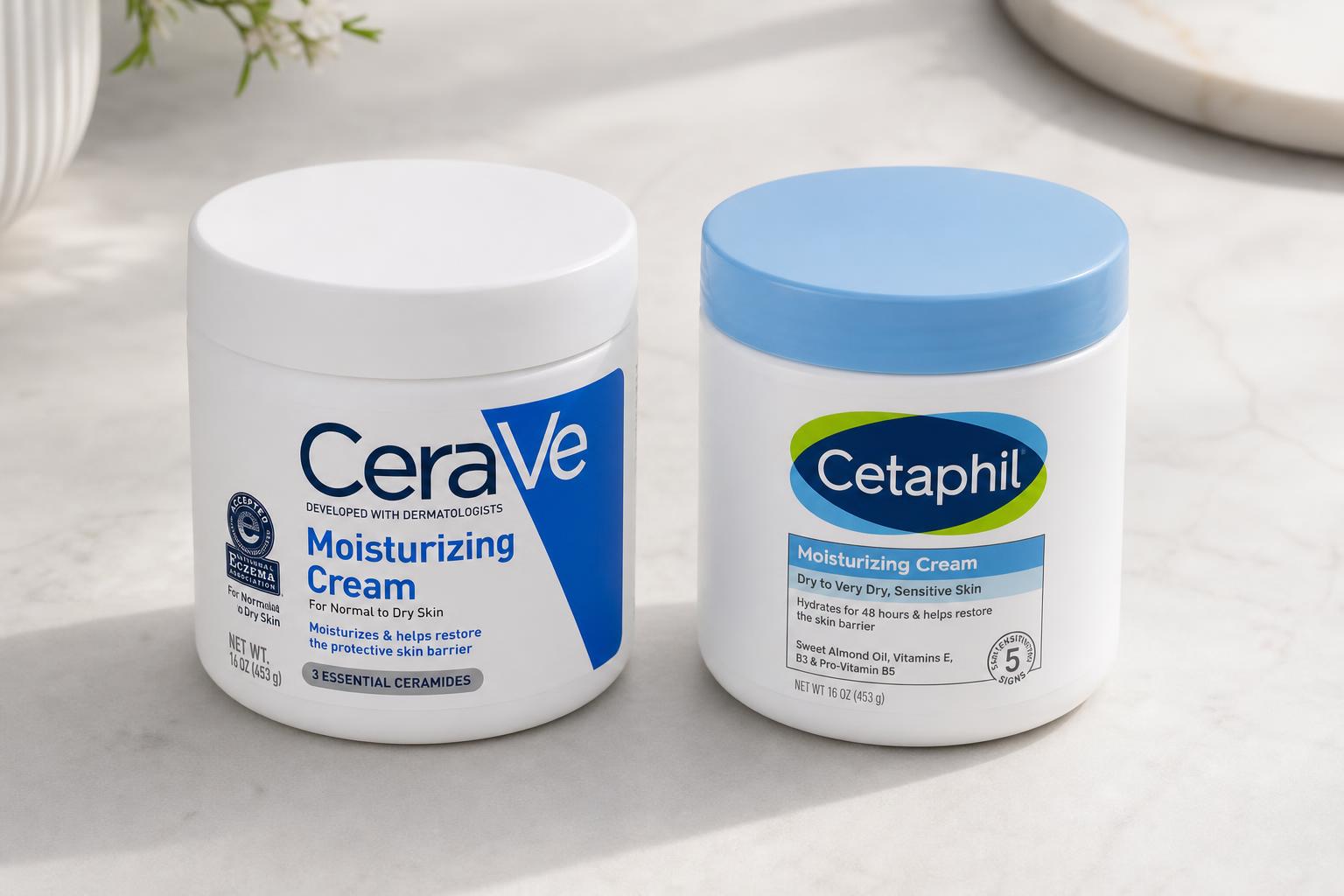
- CeraVe vs Cetaphil — the other $15 moisturizer showdown.
- Best Vitamin C Serums 2026 — the brightening serum to layer on top.
- Best Retinol for Beginners 2026 — the anti-aging step to add.
- Best Moisturizers for Dry Skin 2026 — 5 dermatologist picks ranked.
More guides for you
Found this useful? Share it.
Save to Pinterest%22%2F%3E%0A%20%20%20%20%3Crect%20x%3D%2260%22%20y%3D%2260%22%20width%3D%22880%22%20height%3D%221380%22%20fill%3D%22none%22%20stroke%3D%22%23fbbf24%22%20stroke-width%3D%223%22%2F%3E%0A%20%20%20%20%3Ctext%20x%3D%22500%22%20y%3D%22220%22%20text-anchor%3D%22middle%22%20font-family%3D%22Georgia%2C%20serif%22%20font-size%3D%2234%22%20fill%3D%22%23fbbf24%22%20letter-spacing%3D%228%22%3EBEAUTY%3C%2Ftext%3E%0A%20%20%20%20%3Ctext%20text-anchor%3D%22middle%22%20font-family%3D%22Georgia%2C%20serif%22%20font-size%3D%2296%22%20font-weight%3D%22700%22%20fill%3D%22%23ffffff%22%3E%3Ctspan%20x%3D%22500%22%20y%3D%22340%22%3ECeraVe%20vs%20La%3C%2Ftspan%3E%3Ctspan%20x%3D%22500%22%20y%3D%22460%22%3ERoche-Posay%3A%20Which%3C%2Ftspan%3E%3Ctspan%20x%3D%22500%22%20y%3D%22580%22%3ESkincare%20Brand%3C%2Ftspan%3E%3Ctspan%20x%3D%22500%22%20y%3D%22700%22%3EWins%3F%3C%2Ftspan%3E%3C%2Ftext%3E%0A%20%20%20%20%3Ctext%20x%3D%22500%22%20y%3D%221240%22%20text-anchor%3D%22middle%22%20font-family%3D%22Helvetica%2C%20Arial%2C%20sans-serif%22%20font-size%3D%2228%22%20fill%3D%22%23cbd5e1%22%20letter-spacing%3D%224%22%3EEXPERT%20REVIEWS%20%C2%B7%202026%3C%2Ftext%3E%0A%20%20%20%20%3Ctext%20x%3D%22500%22%20y%3D%221360%22%20text-anchor%3D%22middle%22%20font-family%3D%22Helvetica%2C%20Arial%2C%20sans-serif%22%20font-size%3D%2244%22%20font-weight%3D%22700%22%20fill%3D%22%23ffffff%22%20letter-spacing%3D%222%22%3Etopdealsfindr.com%3C%2Ftext%3E%0A%20%20%3C%2Fsvg%3E)