CeraVe vs Cetaphil: Which Drugstore Moisturizer Wins?
By The TopDealsFindr TeamPublished May 18, 2026
Both sit on every dermatologist's shelf. Both cost ~$15 on Amazon. But CeraVe and Cetaphil moisturizing creams have very different formulas — and the right one depends on your skin. Here's the honest head-to-head.
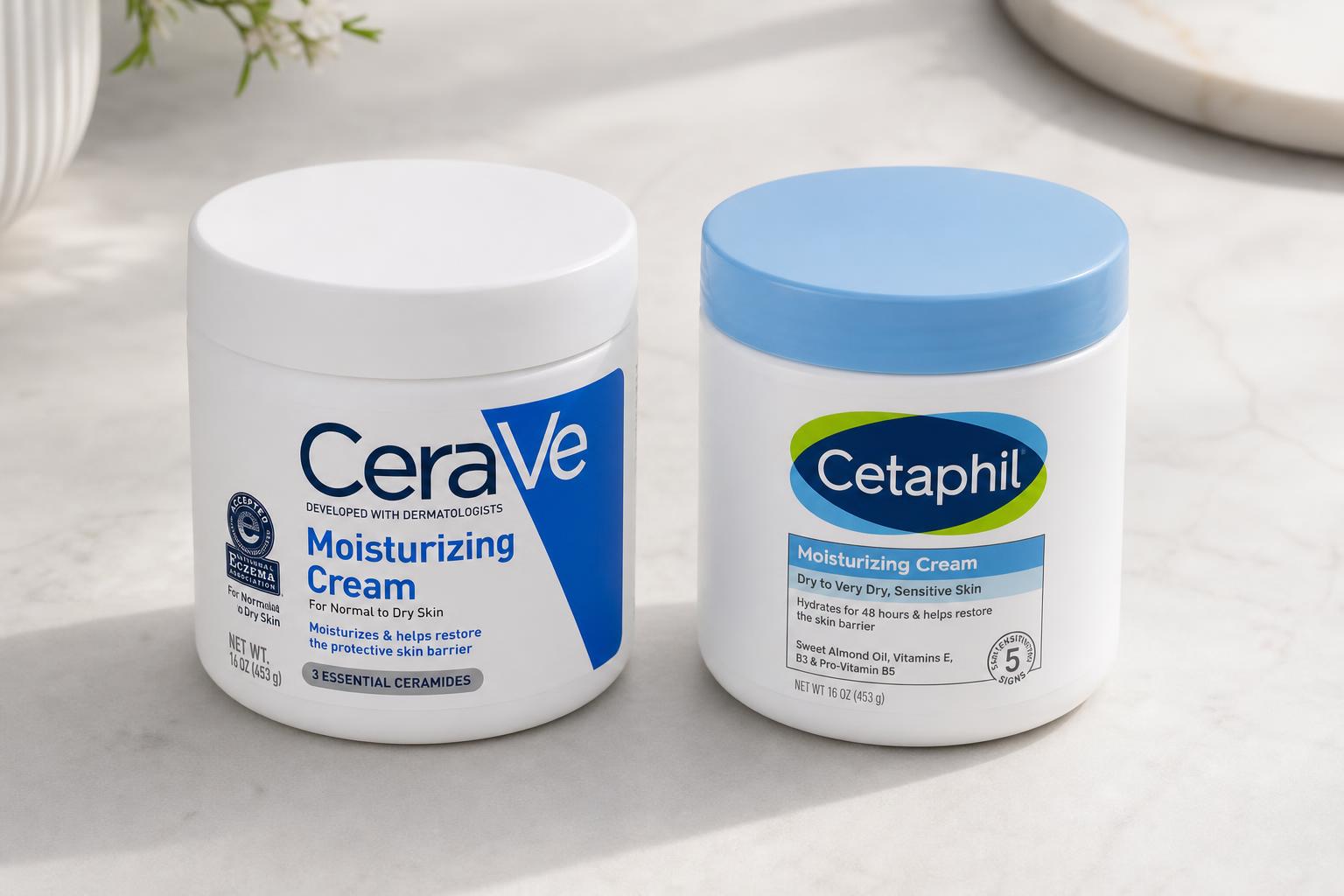
Quick verdict
- Buy CeraVe Moisturizing Cream if you have dry, eczema-prone or barrier-damaged skin. Ceramides + hyaluronic acid do the heavy lifting.
- Buy Cetaphil Moisturizing Cream if you have sensitive, reactive skin that hates any ingredient list. Cetaphil is the safer minimalist.
CeraVe Moisturizing Cream
Ceramide-packed barrier repair. The dermatologist default.
- 3 essential ceramides + hyaluronic acid
- MVE delivery — releases hydration over 24h
- Non-comedogenic, fragrance-free
- Tub lasts 3–4 months daily
- Thicker texture — slow morning absorb
- Tub packaging is unhygienic for some
The strongest barrier-repair drugstore moisturizer under $20. If your skin is dry, flaky or recovering from retinol, this wins.
Cetaphil Moisturizing Cream
Minimalist sensitive-skin classic. Boring is the point.
- Short, tolerant ingredient list
- Glycerin + sweet almond oil
- Fragrance- and paraben-free
- Tested for very sensitive skin
- No ceramides
- No active brightening or anti-aging ingredients
If your skin reacts to everything, Cetaphil is the safest cream in the drugstore. Less innovation than CeraVe, but fewer triggers.
5 key comparison points
1. Active ingredients
CeraVe wins: 3 ceramides + hyaluronic acid + niacinamide. Cetaphil sticks to glycerin and emollients — gentler but less effective at rebuilding the skin barrier.
2. Hydration over 24 hours
CeraVe's MVE technology releases moisture slowly across the day. Cetaphil hydrates well immediately but fades faster.
3. Texture & absorption
Both are thick creams. Cetaphil absorbs slightly faster and feels lighter; CeraVe sits richer — better for night use.
4. Sensitivity & reactivity
Cetaphil wins for the most reactive skin (eczema flare-ups, post-procedure, retinol burn). The shorter ingredient list means fewer triggers.
5. Price & value
Identical: ~$15–16 for a 16 oz tub. CeraVe gives more actives per dollar; Cetaphil gives more tolerance per dollar.
At a glance
| Feature | CeraVe | Cetaphil |
|---|---|---|
| Price | ~$16 | ~$15 |
| Ceramides | Yes (×3) | No |
| Hyaluronic acid | Yes | No |
| Fragrance-free | Yes | Yes |
| Texture | Rich, slow absorb | Light, fast absorb |
| Best for | Dry / barrier repair | Reactive / sensitive |
Frequently asked questions
Can I use both?
Yes — CeraVe at night for barrier repair, Cetaphil in the morning under SPF for a lighter feel. Many dermatologists recommend exactly this combo.
Which is better for acne-prone skin?
CeraVe. The niacinamide helps regulate oil and inflammation, and the formula is non-comedogenic.
Are they the same as the lotion versions?
No. The creams (tubs) are richer than the lotions (pumps). For dry skin, always pick the cream.
Our final pick
For most people in 2026, CeraVe Moisturizing Cream is the smarter buy — same price, more actives, better barrier repair. Pick Cetaphil only if your skin is genuinely reactive.
Check CeraVe on Amazon · Check Cetaphil on Amazon
Disclosure: TopDealsFindr earns a commission on purchases made through links in this article. It never affects which products we recommend.
More skincare guides
- CeraVe vs La Roche-Posay — the next brand showdown if Cetaphil isn't enough.
- Best Vitamin C Serums 2026 — the perfect morning add-on to a CeraVe routine.
- Best Retinol for Beginners 2026 — start anti-aging without the irritation.
- Best Moisturizers for Dry Skin 2026 — 5 dermatologist picks ranked.
- Best CeraVe Products 2026 — the complete lineup, ranked.
Found this useful? Share it.
Save to Pinterest%22%2F%3E%0A%20%20%20%20%3Crect%20x%3D%2260%22%20y%3D%2260%22%20width%3D%22880%22%20height%3D%221380%22%20fill%3D%22none%22%20stroke%3D%22%23fbbf24%22%20stroke-width%3D%223%22%2F%3E%0A%20%20%20%20%3Ctext%20x%3D%22500%22%20y%3D%22220%22%20text-anchor%3D%22middle%22%20font-family%3D%22Georgia%2C%20serif%22%20font-size%3D%2234%22%20fill%3D%22%23fbbf24%22%20letter-spacing%3D%228%22%3EBEAUTY%3C%2Ftext%3E%0A%20%20%20%20%3Ctext%20text-anchor%3D%22middle%22%20font-family%3D%22Georgia%2C%20serif%22%20font-size%3D%2296%22%20font-weight%3D%22700%22%20fill%3D%22%23ffffff%22%3E%3Ctspan%20x%3D%22500%22%20y%3D%22340%22%3ECeraVe%20vs%3C%2Ftspan%3E%3Ctspan%20x%3D%22500%22%20y%3D%22460%22%3ECetaphil%3A%20Which%3C%2Ftspan%3E%3Ctspan%20x%3D%22500%22%20y%3D%22580%22%3EDrugstore%3C%2Ftspan%3E%3Ctspan%20x%3D%22500%22%20y%3D%22700%22%3EMoisturizer%20Wins%3F%3C%2Ftspan%3E%3C%2Ftext%3E%0A%20%20%20%20%3Ctext%20x%3D%22500%22%20y%3D%221240%22%20text-anchor%3D%22middle%22%20font-family%3D%22Helvetica%2C%20Arial%2C%20sans-serif%22%20font-size%3D%2228%22%20fill%3D%22%23cbd5e1%22%20letter-spacing%3D%224%22%3EEXPERT%20REVIEWS%20%C2%B7%202026%3C%2Ftext%3E%0A%20%20%20%20%3Ctext%20x%3D%22500%22%20y%3D%221360%22%20text-anchor%3D%22middle%22%20font-family%3D%22Helvetica%2C%20Arial%2C%20sans-serif%22%20font-size%3D%2244%22%20font-weight%3D%22700%22%20fill%3D%22%23ffffff%22%20letter-spacing%3D%222%22%3Etopdealsfindr.com%3C%2Ftext%3E%0A%20%20%3C%2Fsvg%3E)