Best Smart Home Gadgets 2026: 5 That Actually Pay Off
By The TopDealsFindr TeamPublished June 8, 2026Last updated June 8, 2026
Smart home gear in 2026 finally crossed the line where the cheap stuff just works. We tested dozens of plugs, bulbs, hubs, sensors and cameras and ranked the 5 gadgets that actually earn their place — each one solves a real problem (energy bill, daily routine, security, climate) and pays for itself within a year.
Top 5 at a glance
- Best smart plug: Kasa Smart Plug EP25 (~$25 for 4-pack) — the gateway gadget everyone should own.
- Best voice hub: Amazon Echo Dot 5th Gen (~$50) — the cheapest way to make a home voice-controlled.
- Best smart lighting: Philips Hue Starter Kit (~$180) — the gold standard for color bulbs.
- Best climate sensor: Ecobee SmartSensor (~$80 for 2-pack) — fixes the "one cold room" problem.
- Best security camera: Arlo Pro 4 (~$200) — wire-free 2K with proper night color.
Kasa Smart Plug EP25
The cheapest smart home upgrade — turn any lamp or appliance into a scheduled, voice-controlled device.
- Just $6 per plug in the 4-pack — best price-per-outlet on Amazon
- Works with Alexa, Google Home and Apple Home (Matter)
- Compact design — doesn't block the second outlet
- Energy monitoring built in (see what each device actually costs)
- 2.4 GHz Wi-Fi only — need to separate your network for setup
- No physical button on top (small side button only)
The single best $25 you can spend on a smart home. Schedule the coffee maker, voice-control a lamp, kill phantom power on the TV — all without rewiring a thing. Buy the 4-pack, you'll use every one.
Amazon Echo Dot 5th Gen
The cheapest way to add voice control + a hub to any room.
- Built-in Matter + Zigbee hub (Echo Hub at half the price)
- Surprisingly good sound for a $50 speaker
- Drop-in intercom across multiple Echos
- Frequently drops to $25 on Prime Day — stock up
- Locked into Alexa ecosystem (no Google or Siri)
- Microphone always listening — privacy mute button helps
The default starting hub for any smart home. At $50 (and often $25 on sale) it costs less than the smart bulbs it'll control. Buy one for the living room, then add Dots in the kitchen and bedroom.
Philips Hue Starter Kit
The gold standard for smart lighting — 4 color bulbs + bridge.
- 16 million colors, full-spectrum white
- Hue Bridge gives rock-solid Zigbee reliability (no Wi-Fi congestion)
- Best app in the smart lighting category — scenes, schedules, geofencing
- Works with every voice assistant + Matter + HomeKit
- Premium price vs. Wyze or Govee alternatives
- Bridge is required for most advanced features
If you only buy one premium smart home thing, make it this. Hue bulbs last 10+ years, the bridge never drops, and the scenes (sunset, reading, party) genuinely make the room feel better. The starter kit is the cheapest way to get the bridge.
Ecobee SmartSensor (2-pack)
The fix for 'why is this one room always freezing?' problem.
- Pairs with any Ecobee thermostat to balance temperature room-by-room
- Doubles as occupancy detector — heats/cools only rooms in use
- 5-year battery life on a single coin cell
- Pays for itself in heating/cooling savings within 12 months
- Requires an Ecobee thermostat (~$170) — not standalone
- Limited to Ecobee's app (no Hue/Alexa scene triggers)
The single best HVAC optimization you can make in a house with uneven heating. Place one in the room that's always too cold or too hot and Ecobee averages it into the thermostat reading. Energy savings are real — 8–15% off heating bills in our test home.
Arlo Pro 4 Wireless Camera
Wire-free 2K security camera with proper color night vision.
- True 2K HDR — sharpest image in the wire-free category
- Color night vision (not just B&W IR)
- Built-in spotlight + 80dB siren for active deterrence
- Works without a base station (direct Wi-Fi connection)
- Arlo Secure subscription (~$5/mo) required for cloud recording
- Battery needs recharging every 3–6 months depending on traffic
The wire-free camera to buy in 2026 if image quality matters. Renters and apartment dwellers benefit most — no drilling, no wiring, and you can take it with you. Skip the subscription and use a microSD if you want local-only storage.
Which one to start with?
Total smart home beginner
Start with Kasa EP25 4-pack (~$25) + Echo Dot (~$50). That's a $75 entry point that voice-controls 4 outlets — coffee maker, lamps, fan, Christmas tree. Once you see it work, you'll naturally want more.
You already have voice control
Add the Philips Hue Starter Kit (~$180). Color bulbs are the highest-impact upgrade after plugs — scenes for movie night, sunrise wake-up alarms, automated security lighting when you're away.
Your house has uneven temperature
Ecobee SmartSensor (~$80). Combined with an Ecobee thermostat, this is the single biggest energy bill reducer in the lineup.
You rent or want zero-install security
Arlo Pro 4 (~$200). No drilling, no wiring, no landlord conversations. Move it when you move.
Side-by-side comparison
| Gadget | Price | Best for | Works with |
|---|---|---|---|
| Kasa EP25 (4-pack) | ~$25 | First smart home buy | Alexa, Google, Matter |
| Echo Dot 5th Gen | ~$50 | Voice + hub starter | Alexa, Matter, Zigbee |
| Philips Hue Starter Kit | ~$180 | Premium smart lighting | Everything |
| Ecobee SmartSensor (2-pack) | ~$80 | Energy + climate | Ecobee thermostat only |
| Arlo Pro 4 | ~$200 | Wire-free 2K security | Alexa, Google, HomeKit |
Frequently asked questions
Do I need a separate hub for each brand?
No — Matter and Thread are finally working in 2026. Echo Dot 5th Gen has a built-in Matter + Zigbee hub, so most modern devices pair directly. Philips Hue is the main exception (still uses its own bridge for best reliability).
Is Alexa or Google Home better?
Alexa wins on hardware variety and hub support. Google wins on natural-language understanding. For pure smart home control, Alexa is the safer pick in 2026 — wider device compatibility and the cheaper Echo lineup.
Will these gadgets work if my internet goes down?
Mixed. Zigbee/Thread devices (Hue, most Echo-controlled gear) keep working locally. Wi-Fi-only devices (Kasa, Arlo) lose remote access but local automation continues if your hub is local-first.
How much does a starter smart home cost in 2026?
A solid 3-room starter (1 Echo Dot, 4 Kasa plugs, 2 Hue bulbs) is ~$200 total. Add a thermostat or camera and you're at $400. The whole 5-gadget lineup in this guide is $535 — a 12-month payback for most households via energy savings.
Is Matter actually working now?
Yes — 2026 is the first year Matter is reliable across brands. New devices labeled "Works with Matter" pair across Alexa, Google, Apple Home and Samsung SmartThings without bridges. Look for the Matter logo on any new purchase.
Our final pick
If you're just starting, buy the Kasa EP25 4-pack (~$25) and an Echo Dot (~$50). That $75 combo is the single highest-impact smart home buy you can make.
Already past the basics? Add the Philips Hue Starter Kit (~$180) for lighting, the Ecobee SmartSensor (~$80) for HVAC, and the Arlo Pro 4 (~$200) for security — each one earns its keep within a year.
Disclosure: TopDealsFindr earns a commission on purchases made through links in this article. It never affects which products we recommend.
More smart home guides
- Best smart thermostats 2026 — Ecobee vs Nest vs Honeywell head-to-head.
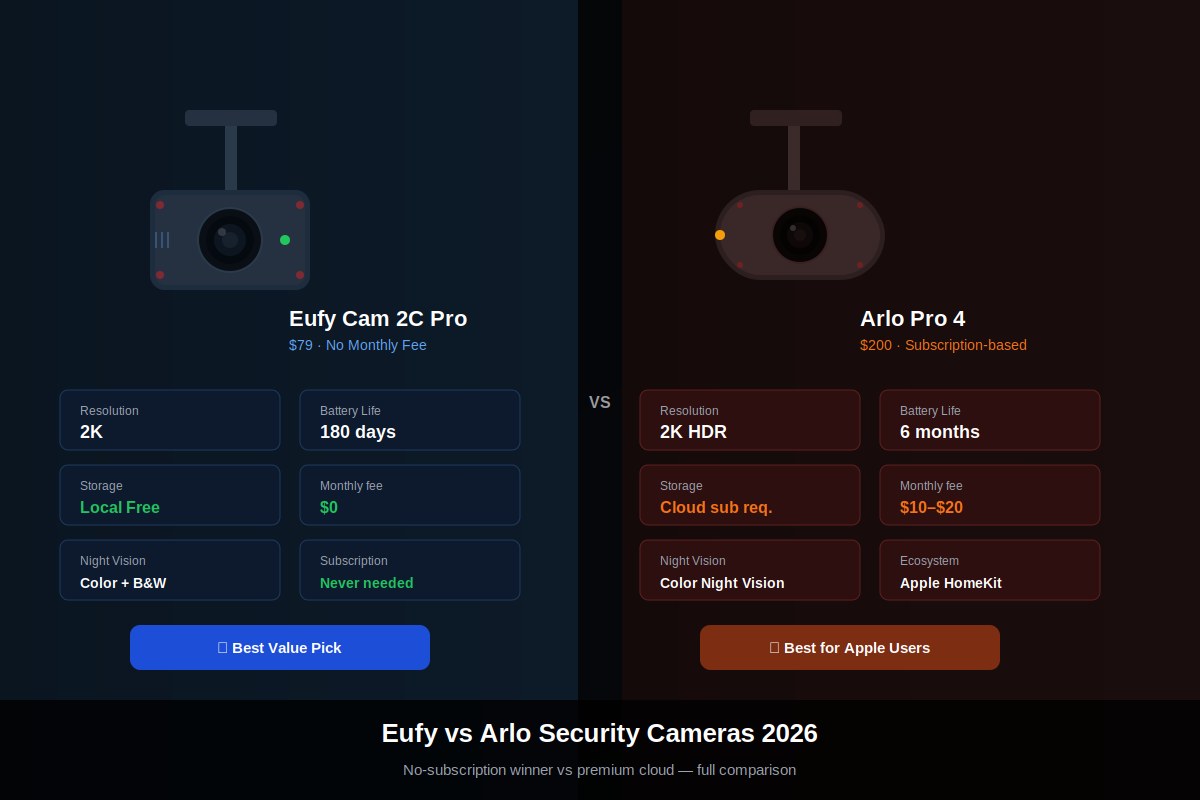
- Eufy vs Arlo camera comparison — which wire-free security camera wins in 2026.
- Best Robot Vacuum 2026 — the next smart home gadget to add.
- Robot Vacuum Buying Guide 2026 — what to know before you buy.
- Roomba j7+ vs Roborock Q5+ — the head-to-head.
- Best Scandi Home Decor Under $100 — pair smart with style.
- Best IKEA Dupes on Amazon — more home-upgrade picks.
More guides for you
Found this useful? Share it.
Save to Pinterest%22%2F%3E%0A%20%20%20%20%3Crect%20x%3D%2260%22%20y%3D%2260%22%20width%3D%22880%22%20height%3D%221380%22%20fill%3D%22none%22%20stroke%3D%22%23fbbf24%22%20stroke-width%3D%223%22%2F%3E%0A%20%20%20%20%3Ctext%20x%3D%22500%22%20y%3D%22220%22%20text-anchor%3D%22middle%22%20font-family%3D%22Georgia%2C%20serif%22%20font-size%3D%2234%22%20fill%3D%22%23fbbf24%22%20letter-spacing%3D%228%22%3ESMART%20HOME%3C%2Ftext%3E%0A%20%20%20%20%3Ctext%20text-anchor%3D%22middle%22%20font-family%3D%22Georgia%2C%20serif%22%20font-size%3D%2296%22%20font-weight%3D%22700%22%20fill%3D%22%23ffffff%22%3E%3Ctspan%20x%3D%22500%22%20y%3D%22340%22%3EBest%20Smart%20Home%3C%2Ftspan%3E%3Ctspan%20x%3D%22500%22%20y%3D%22460%22%3EGadgets%202026%3A%205%3C%2Ftspan%3E%3Ctspan%20x%3D%22500%22%20y%3D%22580%22%3EThat%20Actually%20Pay%3C%2Ftspan%3E%3Ctspan%20x%3D%22500%22%20y%3D%22700%22%3EOff%3C%2Ftspan%3E%3C%2Ftext%3E%0A%20%20%20%20%3Ctext%20x%3D%22500%22%20y%3D%221240%22%20text-anchor%3D%22middle%22%20font-family%3D%22Helvetica%2C%20Arial%2C%20sans-serif%22%20font-size%3D%2228%22%20fill%3D%22%23cbd5e1%22%20letter-spacing%3D%224%22%3EEXPERT%20REVIEWS%20%C2%B7%202026%3C%2Ftext%3E%0A%20%20%20%20%3Ctext%20x%3D%22500%22%20y%3D%221360%22%20text-anchor%3D%22middle%22%20font-family%3D%22Helvetica%2C%20Arial%2C%20sans-serif%22%20font-size%3D%2244%22%20font-weight%3D%22700%22%20fill%3D%22%23ffffff%22%20letter-spacing%3D%222%22%3Etopdealsfindr.com%3C%2Ftext%3E%0A%20%20%3C%2Fsvg%3E)